Every glamping photo looks dreamy online: a king bed under canvas, string lights glowing at dusk, a forest right outside. But the structure behind that photo matters more than the styling. Choosing between a safari tent, a dome and a yurt can make or break your trip comfort, because each one handles weather, noise and temperature very differently.
This guide walks you through what each structure actually is, how it performs through the seasons, and what a typical glamping stay costs per night. We then match each option to different travel styles, from romantic stargazing trips to family getaways, and share realistic booking timelines so you don’t miss out on peak-season dates. A pre-booking checklist rounds things off, covering heating, bathrooms and the details sites often leave out of their listings. By the end, you’ll know exactly which glamping stay fits the trip you have in mind.
What a Safari Tent, Dome and Yurt Actually Are
Despite the shared “glamping” label, these three structures are built very differently, and those differences shape everything from warmth to how close you feel to nature.
Safari tents
A safari tent is a large canvas structure stretched over a rigid frame, borrowing its design from the classic East African hunting camp. Most sit on raised wooden decks, and the better models come fully furnished with real beds, dressers and sometimes a small lounge area. Mesh window panels let air flow through while keeping insects out, which is a big part of their appeal in warm weather.
Geodesic domes and yurts
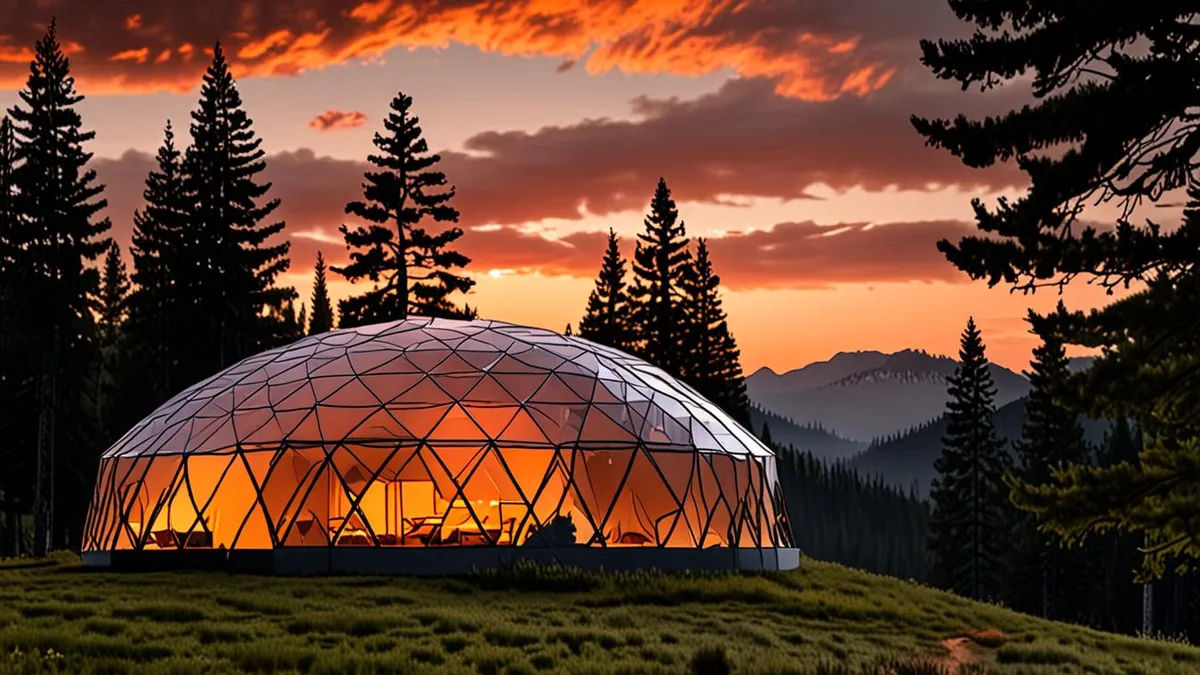
Geodesic domes are the modern face of glamping. They’re built from hard or hybrid panels arranged in a spherical shape, which makes them far better at shedding wind and snow than flat-sided structures. Many feature transparent skylight panels, so you can lie in bed and watch the sky.
Yurts are the oldest of the three. These circular tents of felt or canvas stretch over a lattice wall framework, a design rooted in Central Asian nomadic tradition that has been refined over centuries. That round, low-profile shape is remarkably efficient at holding heat, which is why yurts remain a favorite in cold climates.
Comfort and Weather: Which Glamping Stay Handles Each Season
Weather is where these three structures really diverge, and it’s often the deciding factor people overlook. A tent that feels magical in July can be miserable in January, so it pays to match the structure to the season you’re traveling before you fall in love with a listing’s photos.
Safari tents breathe beautifully in summer heat. The canvas and mesh panels allow constant airflow, so you rarely get that stuffy, trapped feeling even on hot afternoons. The trade-off is insulation: canvas simply can’t hold warmth the way solid walls can, which is why most safari tent sites close for the winter months rather than asking guests to shiver through cold nights.
Domes are the winter show-offs. Their curved panels shed snow and resist wind well, and when transparent panels are included, the stretch from roughly October to March becomes prime stargazing season, with long, dark nights overhead and no need to leave your bed for a sky show.
Yurts are the cold-weather champions. Their circular design and insulating walls retain heat better than either of the other two, and many yurt sites operate year-round, winter included, making them a reliable off-season pick.
- Safari tents in summer: the raised wooden decks keep you off damp ground and away from crawling insects, a real comfort after rain.
- Domes in a storm: because wind flows around the curved surface instead of pushing against flat walls, domes tend to feel steadier in gusty weather.
- Yurts with a wood stove: many winter-ready yurts include one, letting you dry wet gloves and warm the whole space in minutes.
What Each Glamping Stay Costs per Night
Glamping prices vary enormously by region, season and how much luxury is packed inside, but typical ranges give you a solid starting point for budgeting. Expect the biggest premiums in scenic hotspots and near national parks, while sites an hour or more from major attractions tend to sit at the lower end of each range.
Safari tents typically run $150 to $400 per night. Where you land in that range depends largely on location and whether you get en-suite facilities; a tent with its own bathroom and a private deck commands the top of the scale. Larger family layouts with two sleeping areas also sit higher than simple two-person units.
Domes are the premium option, at roughly $180 to $500 per night. Panoramic models with large transparent panels sit at the high end, since the view is essentially part of what you’re paying for. Units positioned on ridgelines or lakefronts, or those with added extras like hot tubs, usually occupy the very top of that range.
Yurts are the budget-friendly choice at about $100 to $250 per night, making them the easiest way to try glamping without a big commitment. Many are also the most forgiving option if you’re booking late, since they tend to have more availability than domes in popular areas.
- Shoulder-season savings: the same dome or tent often costs noticeably less in May or late September than at the height of summer, sometimes by a meaningful margin per night.
- What drives the price up: private bathrooms, kitchenettes, hot tubs and standout views are the features that push a listing toward the top of its range.
- Compare what’s included: a $150 yurt with bedding, firewood and a kitchenette can beat a $250 one where everything costs extra, so read the fine print before comparing rates. Cleaning fees and minimum-stay requirements can also change the real total, especially on short two-night trips.
Matching the Stay to Your Travel Style
The best glamping trip starts with an honest look at how you actually travel. A stay that delights a couple on an anniversary can feel cramped for a family of four, and the canvas hideaway that charms you in midsummer may lose its appeal once temperatures drop. Match the structure to your travel style and the season, and everything else falls into place.
Think about what matters most to you before you start browsing listings: the view from bed, room to spread out, warmth on a frosty morning, or a bathroom that feels like home. Each of the three main glamping types excels at one of these priorities, so deciding early saves you hours of scrolling and second-guessing. It also helps to be realistic about your group. Two adults with two kids have very different needs from a couple celebrating something special, and the wrong choice can turn a dream trip into a compromise.
- Couples chasing views and romance: choose a dome with a transparent ceiling panel, so you can watch stars and falling snow from under the duvet. Panoramic models with wide windows are the most photogenic option and tend to book out first for this exact reason.
- Families needing space: pick a safari tent with separate sleeping areas, ideally a partitioned kids’ room, plus a covered deck. The deck doubles as a shaded play and dining space when the sun gets intense, and solid furniture means no wrestling with air mattresses at bedtime.
- Cold-weather or off-season travelers: go for a yurt with a wood stove. The circular felt-and-canvas design holds heat remarkably well, and many yurt sites operate through winter, so you can wake up to a snow-covered landscape without giving up comfort.
- First-time campers who want a hotel-like feel: book a safari tent with an en-suite bathroom. Real beds, a private shower and a proper toilet remove the parts of camping that put beginners off, while you still get the canvas-and-nature atmosphere.
How to Book Your Glamping Stay at the Right Time
Glamping sites are small, often with only a handful of units, so the good ones fill up far earlier than a large hotel ever would. A property with eight or ten accommodations simply cannot absorb the same last-minute demand as a hotel with hundreds of rooms. Booking at the right moment is the difference between the dome facing the valley and the one facing the parking area, or between any availability at all and a disappointed “fully booked” reply. It also affects price, since many small hosts raise rates as their calendar fills. If you have your heart set on a specific unit, treat the booking window as part of the trip planning itself, not an afterthought once flights and time off are sorted. A few minutes of timing can shape the entire stay.
- Reserve peak-season domes 3 to 6 months ahead. The June to September window is when demand peaks, and transparent-ceiling domes sell out fastest because they combine the best weather with the best views. If your dates fall in this period, book as early as your plans allow.
- Use the shoulder season for flexibility. In May and late September, yurts and safari tents often need only 4 to 6 weeks’ notice. You’ll still get pleasant weather in most temperate regions, quieter grounds and more choice of unit, which is ideal if your schedule isn’t fixed.
- Read the cancellation terms before paying. Small glamping sites frequently enforce stricter policies than hotels, sometimes requiring longer notice for a refund because a single canceled night hurts them much more. Check how far in advance you can cancel and whether you get a full or partial refund.
- Confirm your booking in writing. A short email restating your dates, unit type and any special requests creates a record and gives the host a chance to flag problems early.
A little planning goes a long way here. Mark your booking window on the calendar as soon as you pick your dates, set a reminder a week before it opens, and don’t assume a site will hold a unit informally while you think it over. If a stay is fully booked, ask about a waitlist, since cancellations do happen, especially in the weeks just before peak season. Popular glamping stays reward the organized traveler.
Checklist Before You Commit to a Glamping Stay
Glamping listings can make every unit look identical in photos, but the details that shape your experience rarely appear in the gallery. Two safari tents on the same property can feel completely different depending on their position, their heating setup and what the rate actually covers. Before you pay a deposit, spend ten minutes messaging the host a few direct questions. It’s the easiest way to avoid arriving at a beautiful tent that’s freezing at night, or facing a fence instead of a sunset.
Start with the basics: temperature, bathrooms and what’s actually included in the rate. Then look past the marketing photos and check where your unit physically sits on the property. A “dome with a view” means nothing if the transparent panel faces your neighbor’s deck instead of the valley. Most hosts answer these questions quickly and honestly, and vague or evasive replies are themselves useful information.
- Confirm heating and cooling: canvas safari tents rarely have air conditioning, so in hot summer regions ask about fans, shade placement and cross-ventilation through the mesh windows. For cold stays, ask whether heating is a wood stove you must tend yourself or something automatic that runs overnight.
- Ask about the bathroom setup: a private en-suite changes the whole experience compared to a shared washhouse a few minutes’ walk away. If you’re booking a yurt or a budget unit, find out exactly how far the facilities are, whether they’re heated in winter and whether they’re lit after dark.
- Verify what the rate includes: bedding, towels, a kitchenette, cooking gear, firewood and Wi-Fi vary widely between sites. Some hosts supply seasoned firewood for the stove; others charge for it or expect you to bring your own, which matters if you booked a cold-weather yurt.
- Check the site map: ask which unit number you’re getting and how it’s oriented. Some “dome with a view” units face neighboring tents rather than the landscape, and hosts can usually tell you honestly which units have the best sightlines.
Finally, ask about noise and light at night. Units near a communal fire pit or the parking area stay brighter and livelier than those at the edge of the property, and light pollution matters if you chose a dome specifically for stargazing. A short exchange with the host before booking turns a gamble into a decision you can make with confidence.
Finding Your Perfect Glamping Stay
So which one fits you? If you are planning a summer family trip, a safari tent gives you space and that classic canvas feel. If you care most about views and night skies, a dome is the splurge worth making. If you want to travel in the cold months, a yurt is the stay that keeps working when the temperature drops.
Your budget narrows it down further: yurts start around $100 a night, while premium domes can reach $500. And timing matters as much as the choice itself. Book a peak-season dome three to six months ahead, or enjoy more flexibility by traveling in shoulder season. Whichever stay you pick, the right match turns a dreamy photo into a trip that actually feels like one. Have a glamping story or a favorite of the three? Tell us in the comments or share this article.