Scroll through any villa rental site and you’ll find thousands of options, all promising infinity pools, sea views and five-star luxury. The photos look gorgeous, the descriptions sound identical, and yet the right villa for your holiday is rarely the one with the prettiest hero image. Pick badly and you end up with a beautiful property that doesn’t fit your group, sits too far from the beach or quietly costs far more than the nightly rate suggested.
The good news is that choosing well comes down to a handful of practical checks. This guide walks you through each one: matching the villa to your group size and travel style, picking the right location within your destination, setting a realistic budget beyond the headline price, timing your booking around the seasons, matching amenities to how you’ll actually spend your days, and vetting the listing before you pay anything. Work through them in order and you’ll finish with a shortlist you can book with confidence.
Start With Your Group Size and Travel Style
Before you fall in love with a pool photo, count heads. Most villas sleep 6-12 guests, and the bedroom count and bed configurations matter more than the headline “sleeps 10” figure. Two couples may not want to share two doubles pushed together; a family with young children needs proper twin rooms or a safe, separate kids’ room. Ask the owner or agent exactly how the beds are arranged, including sofa beds and rollaways, because those are rarely as comfortable as a real bedroom.
Layouts that match your group
Next, think about how much togetherness you actually want. Family-friendly layouts often put bedrooms on one floor with a shared living space, which works well with small children. Groups of couples usually prefer multiple en-suites so nobody draws straws for the bathroom. Larger parties or multi-generational trips often suit villas with separate wings or self-contained annexes, giving everyone privacy while keeping the group under one roof.
Finally, let the mix of people shape your priorities. Couples traveling together may care most about equal bedrooms and a sociable terrace. Families with kids need a safe, fenced pool, shaded gardens and enough indoor space for rainy afternoons. Mixed-age groups do best with villas offering both quiet corners and a big communal table. Decide these things first, and you’ll filter out half the listings in minutes.
Pick the Right Location Within Your Destination
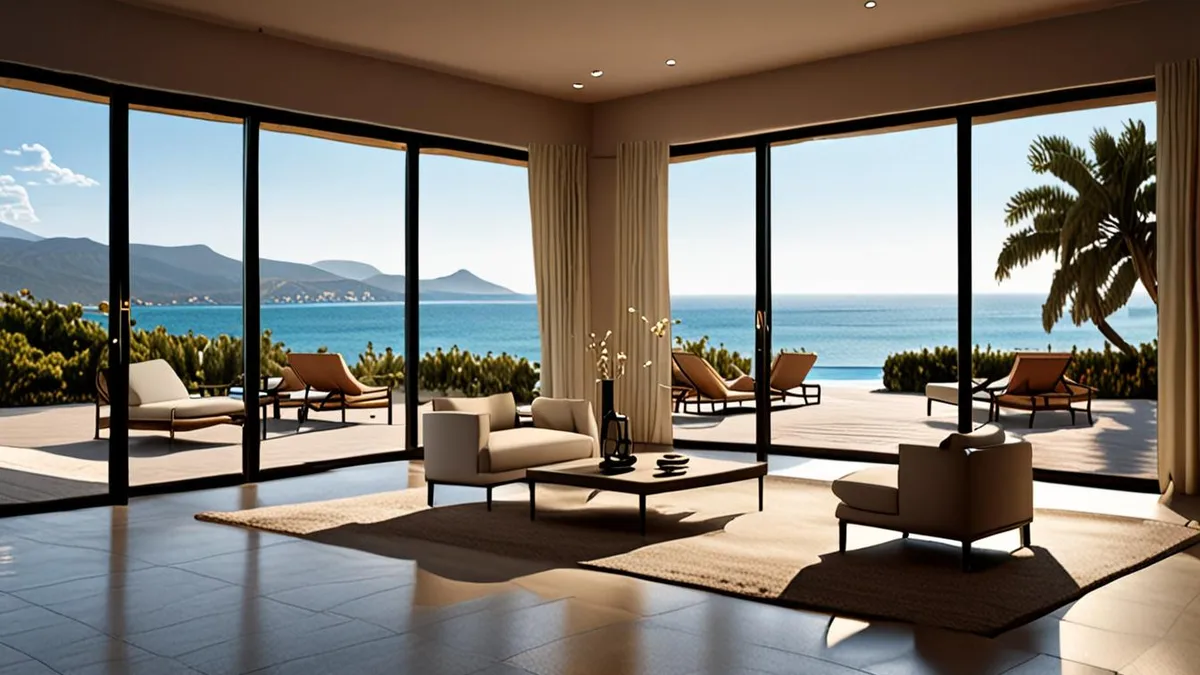
Location within your destination changes both the price and the whole feel of your stay. Beachfront and seafront positions command the highest premiums, sometimes double the rate of an inland property a short drive away. Hillside and village settings cost noticeably less, and they often deliver better views, more privacy and a genuine sense of place. If waking up steps from the sand matters to you, it’s worth the premium; if you plan to explore by day, a hillside retreat can be the smarter buy. For a taste of what a true seafront position offers, see this seafront villa with an infinity terrace.
Be skeptical of distance claims, too. A “5 minutes from the beach” line may mean five minutes by car on winding roads, not a barefoot stroll. Check the exact map pin, measure the walking route yourself and, if it matters, ask the host directly whether the beach is walkable with children and beach gear.
- Walkable town locations: you can skip the rental car entirely, stroll to restaurants and shops in the evening, and everyone in the group can do their own thing without coordinating drivers.
- Remote estates: a rental car is essential, so factor the hire cost and local driving into your plans, but you gain space, silence and often dramatic views.
- Hillside villages: typically a short drive to the coast and town, offering lower rates plus cooler evenings and authentic local tavernas within walking distance.
Set a Realistic Budget Beyond the Nightly Rate
Villa pricing varies enormously, so anchor your expectations before you search. Typical luxury villa rates range from $300 to $2,000+ per night depending on location, season and size. A three-bedroom inland villa in shoulder season sits at the low end; a six-bedroom beachfront estate in peak summer can sail past the top of that range. Knowing your true ceiling keeps you from wasting time on listings you can’t afford.
What the nightly rate actually includes
The headline rate is only the start. Ask exactly what is included: cleaning, utilities, pool heating and Wi-Fi are the usual extras, and if they’re charged separately they can add 10-20% to your total. Pool heating in particular is a common surprise, and it’s the difference between a swimmable pool and a cold one outside high summer. Get the full cost in writing before you pay the deposit.
Then budget for the extras that make a villa holiday special. A private chef typically costs $40-100 per person per meal, which can still undercut restaurant prices for a large group once drinks and service are counted. Add realistic amounts for airport transfers, a mid-stay clean, gratuities for local staff and grocery pre-stocking, and you’ll have a budget that survives contact with the actual invoice.
Time Your Booking Around the Seasons
Timing is the single biggest lever on villa price. In most Mediterranean destinations, June to August is peak season: rates hit their ceiling, the best properties sell out first, and you will have the least negotiating room. If your dates are fixed to school holidays, book early and accept the premium as the cost of securing a top property with the pool, views and bedrooms your group actually wants.
Shift your trip by a few weeks, though, and the picture changes. The shoulder seasons of May-June and September-October typically deliver rates 20-40% lower than peak, while the sea is still warm from the summer and beaches and restaurants are noticeably quieter. Weather in these months is usually pleasant for swimming and sightseeing, though it can be less predictable than midsummer. For couples and groups without school-age children, these weeks are usually the sweet spot: you get the same villa, the same sea views and the same infinity pool for meaningfully less money.
Lead time matters just as much as the calendar. Here is a simple planning guide:
- High-season stays: reserve 6-9 months ahead so you have the full choice of layouts, views and bed configurations rather than the leftovers.
- Shoulder-season stays: a 2-3 month lead time is usually enough, and you may even find owners flexible on minimum stays.
- Large groups: add buffer either way, since villas sleeping 10 or more have far fewer alternatives if your first choice is taken.
Whichever window you target, check the cancellation policy before committing to a non-refundable peak-season rate. Flexible terms cost little upfront and can save you from losing the full amount if plans change.
Match Amenities to How You Will Actually Spend Your Days
Be honest about how you will use the villa. If you plan to spend most days on-site, the outdoor setup matters more than the number of bedrooms. An infinity pool with a proper sea-view terrace, sun loungers in both sun and shade, and a covered lounge for afternoon heat will shape your trip far more than a fancy media room.
For longer stays, look hard at the kitchen and the flow between indoors and out. A well-equipped kitchen, wide opening doors and shaded outdoor dining for the whole group make a week or two far more comfortable than a showpiece kitchen nobody cooks in. If that combination appeals, browse a coastal villa built around infinity-pool elegance to see how these elements come together.
Practical must-haves to verify
Comfort basics are easy to overlook in glossy photos. Confirm that air conditioning is available in all bedrooms, not just the living areas, and ask how it is billed if it is metered separately. Reliable Wi-Fi matters if anyone will work or stream during the stay; ask for recent speed feedback from past guests rather than trusting the listing.
In remote or island locations, ask whether the property has a backup generator. Power cuts are rare but not unknown, and a villa without one can lose water pumps and air conditioning for hours. A quick question now saves a frustrating evening later.
Vet the Listing Before You Pay
Villa listings are marketing documents, so treat every claim as something to verify rather than take on faith. Photos are often taken with wide-angle lenses at the best hour of day, and descriptions can blur the line between “sea view” and “sea glimpse from the roof terrace.” A few minutes of checking before you pay protects you from misleading photos, vague locations and unclear terms. This matters even more for villas than hotels, because a bad surprise is harder to escape once your whole group has committed to one property for the week. Work through these steps in order:
- Cross-check the photos and reviews. Reverse-search a few images to make sure they belong to that property, and read reviews on more than one platform. Pay attention to recent ones that mention maintenance, noise or the accuracy of the description, since older reviews may describe a previous owner or an outdated standard.
- Verify the exact map pin. Ask the host or agency to confirm the pin location, then check it yourself against the beach, town or attractions you care about. “Close to the beach” can mean a five-minute drive, not a stroll.
- Request a video call walkthrough if unsure. A live tour of the bedrooms, pool area and view is the fastest way to confirm the listing matches reality. A reluctant host is itself useful information.
- Confirm cancellation terms and the damage deposit. Get the refund windows in writing and ask the deposit size and when it is returned, so there are no surprises after checkout.
- Identify who manages the property locally. Ask for the name of the on-island or on-site manager and how quickly they respond, since this person handles everything from a broken air conditioner to an early arrival.
Finally, favor reputable booking platforms or established agencies with 24/7 support over unverified direct listings. If a pool pump fails or the Wi-Fi drops mid-stay, having a real support line to call is worth far more than a small saving upfront. Keep copies of your booking confirmation, payment receipts and any written promises about the property, and take a few arrival photos so any dispute is easy to resolve.
Your Villa Shortlist, Made Simple
Choosing a villa comes down to three honest questions: does it fit your group size, does it sit in the right location for how you travel, and can you afford the true all-in cost, not just the nightly rate? Answer those first, and most of the thousands of listings online will filter themselves out.
From there, it is about timing and trust. Booking around the season, whether that means reserving well ahead for peak summer or leaning into shoulder-season savings, gives you better villas for your money. And vetting the listing carefully before you pay protects everything you have planned. Do these checks in order and you can shortlist with real confidence, then get on with enjoying the stay. If this guide helped you plan your trip, leave a comment or share it with your travel group.