Planning your first safari is exciting right up until you try to choose a safari lodge. Suddenly you’re facing tented camps, mobile camps, private concessions, all-inclusive rates and booking windows you don’t yet understand — and one wrong pick can cost thousands of dollars in a destination where mistakes are hard to fix on the ground.
This guide walks you through the decisions in the right order: picking your destination before your lodge, choosing the season that fits your goals, setting a realistic budget, understanding the differences between lodge types, checking location and credentials, and getting your bookings and logistics sorted early. Follow the steps in sequence and the whole process becomes far less overwhelming.
Pick Your Safari Destination First, Then the Lodge
Your choice of country shapes everything else, so start with the wildlife you most want to see. Kenya and Tanzania are the classic choice for the Great Migration, when vast herds move across the Masai Mara and Serengeti and river crossings peak between July and September. Botswana is the pick for water-based viewing in the Okavango Delta, where you might watch elephants from a boat or mokoro rather than a vehicle. South Africa offers the easiest logistics and the most reliable Big Five sightings, making it a comfortable first safari.
Density or exclusivity?
Next, decide what kind of game viewing experience you want. Famous parks like the Masai Mara and Serengeti deliver high animal density, but they can also mean sharing sightings with other vehicles. Private conservancies and concessions are typically quieter, and they usually allow off-road driving and night drives, which parks often restrict. If photography and uncrowded sightings matter to you, a conservancy is worth the usually higher price.
Finally, factor in travel time. Fly-in destinations like the Okavango Delta require charter flights that add cost and complexity to your itinerary, while lodges around Kruger are typically reachable by road from Johannesburg. If you’d rather skip small planes on your first trip, that alone can narrow your shortlist.
Choose the Right Season for Your Safari Lodge Stay
Season affects both what you’ll see and what you’ll pay, so it deserves as much thought as the lodge itself. The dry season runs June to October in East Africa and May to October in southern Africa. Vegetation thins out and animals concentrate at water sources, which is why this window generally offers the best game viewing of the year. It’s also peak pricing, so expect rates at the top of the range.
The green season, roughly November to March or April, is the value traveler’s secret. Rates drop to roughly $250-$700 per person per night, compared with $600-$1,500 in peak season, and the landscapes turn lush and photogenic. The trade-off is afternoon rain, which can occasionally interrupt a game drive.
- Newborn animals are a green-season highlight, and with them come predators on the move — excellent for photographers who don’t mind softer light.
- Birdwatching is typically at its best in the green months, when migratory species are present and resident birds are in breeding plumage.
- Because camps are quieter, you’ll often share game drives with fewer vehicles and enjoy more flexible schedules at smaller properties.
One caution: avoid booking blindly into the long rains of April and May in East Africa. Some camps close entirely or relocate during this period, so confirm that your chosen lodge is operating before you commit.
Set a Realistic Per-Night Budget
Safari pricing looks shocking until you understand what’s included. Ultra-luxury camps can cost several times the standard rate, but that sticker price usually covers far more than a room. The key to judging value is knowing exactly what sits inside the rate before you compare lodges.
Compare packages, not room rates
Most safari stays are sold as all-inclusive packages that bundle meals, twice-daily game drives and park fees into the price. This matters when comparing lodges: a cheaper nightly rate that excludes park fees, drinks and laundry can end up costing more than a pricier all-inclusive option. Ask each lodge for a full breakdown of what’s covered, then compare like with like rather than headline room rates.
Then budget separately for the things that typically aren’t included. International flights sit at the top of that list, along with visas, travel insurance and premium drinks at camps where only house beverages are covered. Tips for your guides and camp staff are usually expected too — commonly $10-$20 per guest per day, split between the guide and the general staff pool. Leave room for optional extras as well, like a hot-air balloon ride over the savanna, which is memorable but rarely cheap. Build all of this into your total trip cost from the start so the final bill never surprises you.
Understand Lodge Types: Tented Camps, Lodges and Mobile Camps
Not every safari accommodation is the same, and the type you pick shapes your whole experience. The three main categories are permanent lodges, luxury tented camps and mobile camps, and each suits a different kind of traveler. First-timers often feel most comfortable in a permanent lodge, while returning safari-goers frequently seek out smaller or more mobile options for a closer connection to the bush.
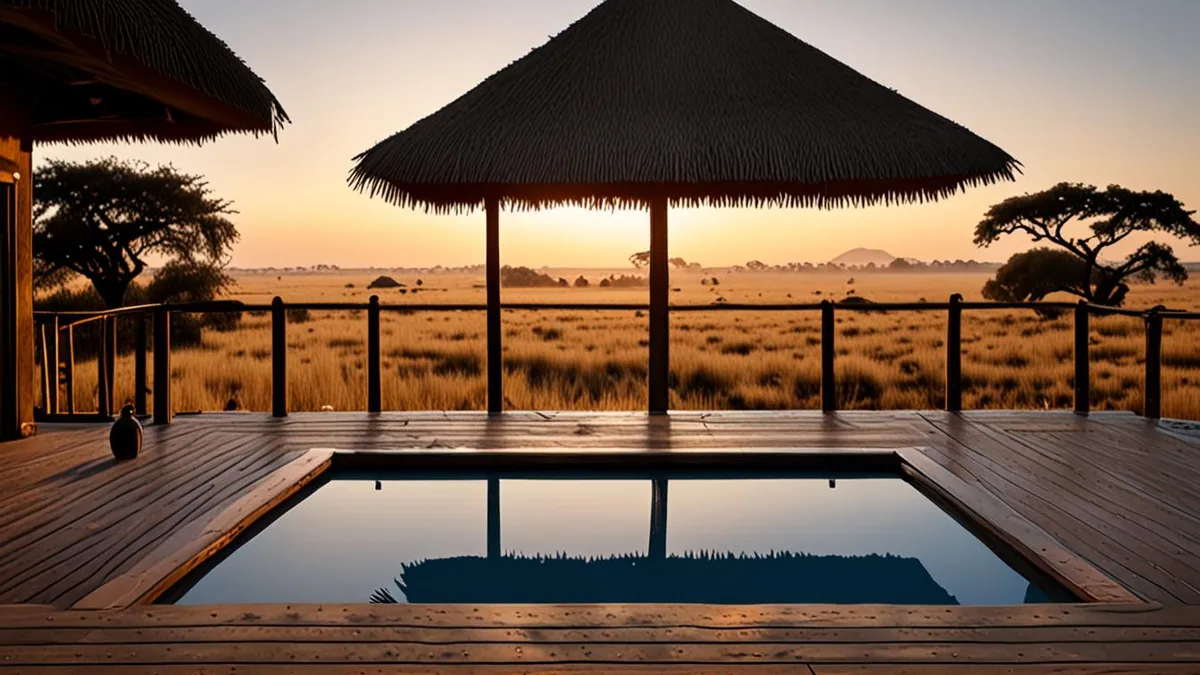
Permanent lodges are built structures with solid walls, real doors and often extras like swimming pools, spas and reliable Wi-Fi. If you are nervous about insects, sounds at night or sleeping in canvas, a lodge removes that worry entirely. Luxury tented camps, on the other hand, deliver the romance of sleeping under canvas with full hotel-level amenities inside the tent, including proper beds, en-suite bathrooms and often a private deck overlooking a waterhole.
Mobile camps are the specialist option. They physically relocate several times a year to follow the Great Migration, trading some comfort and polish for a front-row seat to the action. If witnessing huge herds and river crossings is your top priority, this is the format built for it.
Camp size matters more than many first-timers realize. Here is how the choice typically plays out:
- Small camps (under 12 tents): expect highly personal service, meals shared with your guides around the fire, and flexible schedules, such as leaving before dawn or staying out late when a sighting is unfolding.
- Larger lodges: offer more facilities, such as gyms, shops, multiple dining venues and family rooms, but game drives can be busier and departure times less flexible.
- Mobile migration camps: often semi-permanent tented setups that pack down and move, so expect simpler finishes and lighter structures in exchange for being positioned where the herds are.
- Family or solo travelers: smaller camps frequently accommodate children with private vehicles, while larger lodges usually have dedicated kids’ programs and shared vehicles that keep costs down.
Check Location, Wildlife Access and Camp Credentials
Where a camp physically sits makes a bigger difference to your days than almost any brochure detail. A camp described as “near the park gate” can mean a 45- to 60-minute transfer each morning before you even see your first animal. Camps located inside the reserve or inside a private concession let your guide start driving the moment you leave camp, which is exactly what you want on a dawn game drive.
This matters most in places like the Masai Mara or Serengeti, where the best sightings happen at first light. Ask the lodge or your safari operator directly whether the camp is inside the park boundary or a private concession, and how long the drive to prime wildlife areas takes. A slightly more expensive in-park camp can deliver more hours with animals than a cheaper one outside the gate.
Guiding makes or breaks a safari
Your guide is the single biggest variable in the quality of your game drives. Ask about guide qualifications and training, whether camps use dedicated tracker teams who read the bush ahead of the vehicle, and what the vehicles are like. Open-sided vehicles with tiered seating give every guest an unobstructed view and better photos, which is standard in good private concessions but not everywhere.
Also check the guest-to-vehicle ratio. Six guests per vehicle means a window seat and room to swing a camera; a crowded shared vehicle does not. Finally, if walking safaris, night drives or cultural village visits are on your wishlist, confirm the camp can legally and practically offer them. Private concessions typically allow night drives and walking, while national parks usually restrict vehicles to daytime road networks only.
Book Early and Plan the Logistics
Safari lodges are small, and the best ones sell out long before the high season arrives. A camp with a dozen tents cannot absorb a last-minute wave of bookings, which is why early planning is not optional if you want a specific camp in a specific park during peak months. The good news is that the logistics are straightforward once you know the order to tackle them. Work through the steps below in sequence, and most first-timer headaches disappear before they start.
- Book your camp first. Reserve peak-season lodges 9-12 months in advance, since the small camps with the best locations fill first. Green season stays are more forgiving and can typically be booked 3-6 months out.
- Match your international flights to your camp dates. Once the lodge is confirmed, lock in flights so your arrival and departure days line up with the camp’s transfer schedule and any light-aircraft connections.
- Plan for light-aircraft transfers. Most bush charters cap luggage at 15 kg per person in soft-sided bags, because hard-shell suitcases physically will not fit in a small plane’s hold. Duffel bags are the standard choice.
- Check internal flight logistics. Ask whether flights between camps are included in your package or quoted separately, and confirm which airstrips your camp uses so transfer times are clear.
- See a travel clinic well before departure. Confirm any vaccinations or health requirements for your destination early, since some need to be completed weeks in advance, and ask about malaria precautions for the region and season.
- Confirm what the rate includes. Safari stays are typically priced as all-inclusive packages covering meals, game drives and park fees, but extras such as balloon flights, spa treatments and premium drinks are usually billed separately, so ask for a full breakdown before you pay.
Give yourself a planning calendar with these steps marked against real dates, and the process becomes genuinely manageable. Write down your booking window, your flight dates and your clinic appointment, then tick them off as you go. The travelers who struggle are usually the ones who leave bookings and health appointments to the last minute, then discover their first-choice camp is full or their vaccination series cannot be completed in time. Start early, ask your lodge or operator specific questions in writing, and your first safari will feel far more like an adventure and far less like a logistics puzzle.
Your First Safari Lodge, Sorted
Your first safari lodge decision doesn’t have to feel overwhelming. It comes down to five things: pick your destination first, match the season to your priorities, set a realistic per-night budget, choose the lodge type that fits your comfort level, and book early. Get those right, and the dozens of options narrow down fast.
If game viewing is your top priority, anchor your trip to the dry season and reserve 9-12 months ahead for peak travel. If value matters more, the green season delivers lush scenery and newborn animals at lower rates, and it can be booked closer to departure. Follow that simple framework, and your first safari lodge choice becomes far simpler. Have a question or a safari planning tip of your own? Leave a comment below or share this article with a fellow traveler.