Figuring out where to stay in Banff is trickier than it looks on a map. The lodges clustered along Banff Avenue, the quiet properties on the Tunnel Mountain benchlands, and the secluded spots out toward the Bow Valley Parkway and Lake Minnewanka all sit within a short drive of each other, yet they deliver completely different trips. Pick the wrong area and you can find yourself driving back and forth every evening, paying for a location you never use, or missing out on the mountain views you came for.
This guide compares Banff’s main lodge areas side by side: what each one offers in walkability, quiet, scenery and price, plus the booking windows that matter most. By the end, you should know whether the town site, the benchlands or an outlying lodge fits your travel style, your budget and the season you plan to visit.
Why the Area You Pick in Banff Matters More Than the Lodge Itself
Banff is compact, but it is not uniform. Lodges along Banff Avenue put you within a short stroll of restaurants, cafes and shops, so you can park the car once and walk everywhere. Outlying lodges trade that convenience for something else entirely: quiet evenings, forest settings and wide-open mountain views right outside your window. Neither option is better, but they suit very different trips.
Location shapes your daily itinerary
If you stay outside the town site, expect daily driving. Even a simple dinner in Banff becomes a round trip, and popular day trips stretch further: the drive from the town site to Lake Louise takes about 40 minutes, so a lodge on the wrong side of the valley adds real time to every morning. Your base area effectively decides how much of each day you spend behind the wheel versus on the trail.
Timing matters too. Peak season runs from late June through early September, and demand during those months affects both what you pay and how early you need to reserve. A walkable town-site room and a secluded parkway lodge can differ sharply in price for the same dates, so deciding on your area first, then booking 4-6 months ahead, is the smartest sequence.
Banff Town Site: Where to Stay for Walkability
If your priority is being able to leave the car behind, the Banff town site is the clear choice. Lodges along Banff Avenue and the surrounding side blocks put restaurants, cafes, gear shops and outfitters within a 5-15 minute walk of your door. You can grab breakfast, rent bikes or hike the trails above town without ever starting an engine.
Who the town site suits best
First-time visitors get the most out of this area, since everything is easy to find and easy to reach. It is also the best fit for car-free travelers: the Roam public transit network and Parks Canada shuttles connect downtown Banff with major sights, so you can explore the park without renting a vehicle at all.
The trade-off is price and atmosphere. Town-site lodges charge the highest rates in the area, typically CAD 300-600 per night in summer, and rooms facing the main strip can pick up street noise from passing traffic and late-night foot traffic on corners near the bars and patios. If you are a light sleeper, ask for a room at the back of the property or on an upper floor away from the avenue. For many travelers, though, paying a little more to walk to dinner after a day of hiking is worth every dollar.
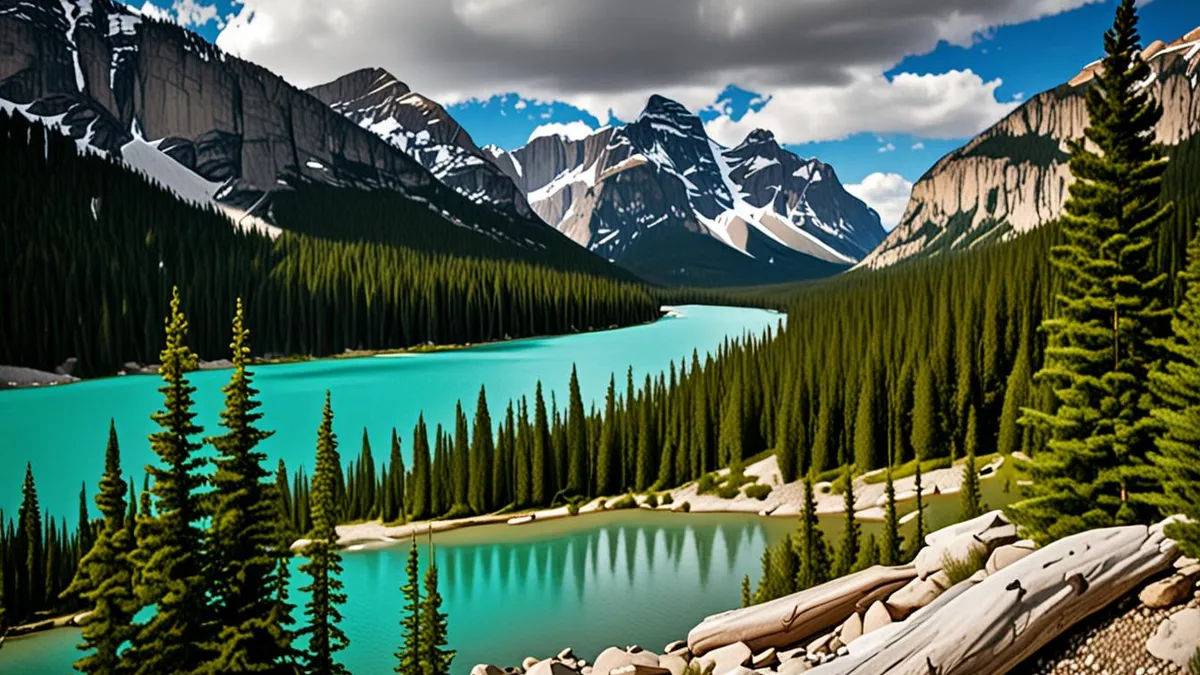
Tunnel Mountain and the Benchlands: Quiet Lodges Close to Town
The lodges spread across the Tunnel Mountain benchlands sit roughly 5-10 minutes’ walk uphill from Banff Avenue, and that slight separation changes the whole feel of a stay. You get forested settings, quieter evenings and often better views of the surrounding peaks, while still being close enough to walk into town for dinner or supplies. It is the middle ground between the busy town site and the fully outlying lodge areas.
This area is especially well suited to longer stays of 4-7 nights. Many properties here offer kitchenettes and balconies, which makes it easy to cook some meals, spread out with laundry after back-to-back hiking days, and settle into a routine rather than living out of a suitcase.
What to know before booking on the benchlands
- The uphill walk is real. Most benchland lodges sit on a slope above town, so the return trip from Banff Avenue ends with a climb that feels longer after a full day on the trails.
- Winter changes the equation. Sidewalks and paths can be icy from snow and melt-freeze cycles, so pack footwear with good grip or plan on a short drive or bus ride into town instead of walking.
- Kitchenettes reward planning. If your room has one, a grocery stop on your way in from Calgary, about 1.5 hours away by car, saves both money and a second trip later in the week.
- Balconies face different directions. Some rooms look toward the mountain itself, others toward the Bow Valley, so if a view matters to you, ask the property which way your specific room faces before booking.
If you want quiet without giving up access to restaurants and shops, the benchlands are usually the best balance in Banff, particularly for travelers staying closer to a week than a weekend.
Outlying Lodge Areas: Bow Valley Parkway and Lake Minnewanka Side
The Bow Valley Parkway (Highway 1A) runs parallel to the Trans-Canada between Banff and Lake Louise, and the lodges scattered along it sit roughly 15-25 minutes from the town site. What you get for that drive is genuine forest seclusion: properties tucked into trees rather than lined along a street, with far less traffic noise than anywhere in town.
The big advantage is timing. This corridor is one of the park’s known wildlife areas, so staying here puts you in position for dawn drives when elk, deer, and occasionally bears are most active along the roadside. Photographers and early risers tend to love this; night owls less so.
The Lake Minnewanka and Two Jack Lake side
On the opposite side of town, the lodges near Lake Minnewanka and Two Jack Lake trade convenience for water and light. This is the pick if sunrise photography or an early canoe session on the lake tops your list, and if nightlife ranks near the bottom. The scenery from this side is some of the most photogenic in the park, especially in the first hour after the sun comes up.
The trade-off is logistical: you will need a car, or a solid shuttle plan, for the whole stay. Evening dinners in Banff mean a 15-25 minute drive back in the dark, and that adds up over a week. If you picture yourself walking to dinner and drinks most nights, stay in town instead and visit these areas by day.
When to Book: Seasons and Lead Times for Banff Lodges
Banff lodges sell out by area and by date, not just by property, so booking well ahead matters as much as choosing where to stay. The trick is to sequence your planning: lock in the things that have hard capacity limits first, then build the rest of the trip around them.
Start with the season. Peak season runs late June through early September, and this is when nearly every lodge in town and out along the parkway fills. Winter, from December to March, is the quieter booking window with noticeably more open rooms, so if your travel dates are flexible, shifting seasons opens up far more choice.
For summer trips, reserve as early as you realistically can. July and August weekends are the first nights to disappear across all areas, so if your dates fall on a Saturday in either month, book those nights before anything else. A weekday-centered itinerary gives you more options at short notice.
Consider winter to cut costs. Stays from December through March typically run roughly 20-40% below summer prices, with nightly rates around CAD 180-400. Availability is better too, which makes shorter-notice trips far more realistic than they would be in July.
If visiting in summer, book the Lake Louise shuttle immediately. Parks Canada shuttle reservations open in spring and sell out in summer. Set a reminder for the opening date, because a lodge booking without a shuttle spot can reshape your whole itinerary.
One practical note: if your dates are fixed around July or August weekends, treat the lodge booking as the first task after flights, not something to sort out closer to departure. And if you are starting late, flexibility on dates is your next best lever.
How to Compare Banff Lodge Areas for Your Travel Style
The right area depends less on which lodge has the best photos and more on how you actually spend a day in Banff. A couple celebrating an anniversary and a family of five with a rented minivan should not end up in the same place, even at the same price. Before you compare individual properties, think honestly about your rhythm: do you want to walk out the door for dinner, or wake up to trees and silence? Do you mind driving ten minutes for coffee, or does that ruin the morning? Matching the area to your travel style matters more than any single lodge choice, and it is the question worth answering before you fall in love with a lobby photo. Here is how the main areas map to different kinds of travelers.
- Couples and luxury seekers: weigh town-site prestige against setting. A Banff Avenue lodge puts you steps from restaurants and evening strolls, while benchland and parkway lodges trade that for panoramic mountain views and privacy. Decide which you will value more at 8 p.m., not noon.
- Families: prioritize kitchenette-equipped lodges on Tunnel Mountain. Breakfast and a few dinners prepared in-room across a week-long stay can save hundreds of dollars over restaurant meals, and the quieter forest setting suits kids better than a main-strip corner. Check whether the lodge has laundry facilities too, since packing light makes travel days with children far easier.
- Budget travelers: target the shoulder months of May and October, when rates drop well below summer prices, and look at outlying areas rather than the town site. Pairing an off-peak month with a parkway lodge gets you close to high-season quality at a fraction of the cost. Just confirm your rental car and daylight hours line up with the longer drives.
Whatever your style, check what is actually included before comparing rates: parking, shuttle access, and kitchen facilities change the real price significantly. A slightly higher nightly rate in the right area often beats a cheaper room that costs you daily drives or restaurant bills. And remember that Banff sits about 1.5 hours from Calgary International Airport, so a lodge with sensible access also makes your arrival and departure days smoother.
Choosing Your Banff Base
Banff packs several very different lodge areas into a small mountain corridor, and that variety is exactly why the choice matters. Stay in the town site and you get walkability to restaurants and shops; pick Tunnel Mountain and you trade a short uphill walk for quiet and space; head out to the Bow Valley Parkway or the Lake Minnewanka side and you gain scenery and seclusion at the cost of a 15-25 minute drive back into town. Choosing the wrong area can quietly add daily driving and cost to your trip.
Two takeaways are worth repeating. Booking 4-6 months ahead for a summer stay, or shifting your dates to winter when rates run 20-40% lower, is the single biggest lever on price. And beyond that, matching the area to your travel style matters more than any individual lodge choice. If this helped you plan your Banff base, leave a comment or share the article with a fellow traveler.